In The Backseat With Taxi, EP. 2: I’m Walkin’, I’m Walkin’, I’m Walkin’
In this essay, Tobi reflects on The North, a film about two friends walking 600 km through the Scottish Highlands and what it has to say about friendship and time.
 Go Back
Publications
In this essay, Tobi reflects on The North, a film about two friends walking 600 km through the Scottish Highlands and what it has to say about friendship and time.
Author
Tobi Are
Date
Read
5 mins
Art
Tobi Are
Date
Read
5 mins
Share


At the time of writing this—about an hour ago—I finished a random film I had on my watchlist. And as someone who swears fealty to Going Into Things As Blindly As Possible, something titled The North did sound pretty vague: What happens over there? Are we going on an adventure? Would it have a tragic death? Thankfully, there weren’t any deaths. But it did have two men walking. A lot.
It’s like The Long Walk, but if you could take breaks. And not have tragic deaths in the process.
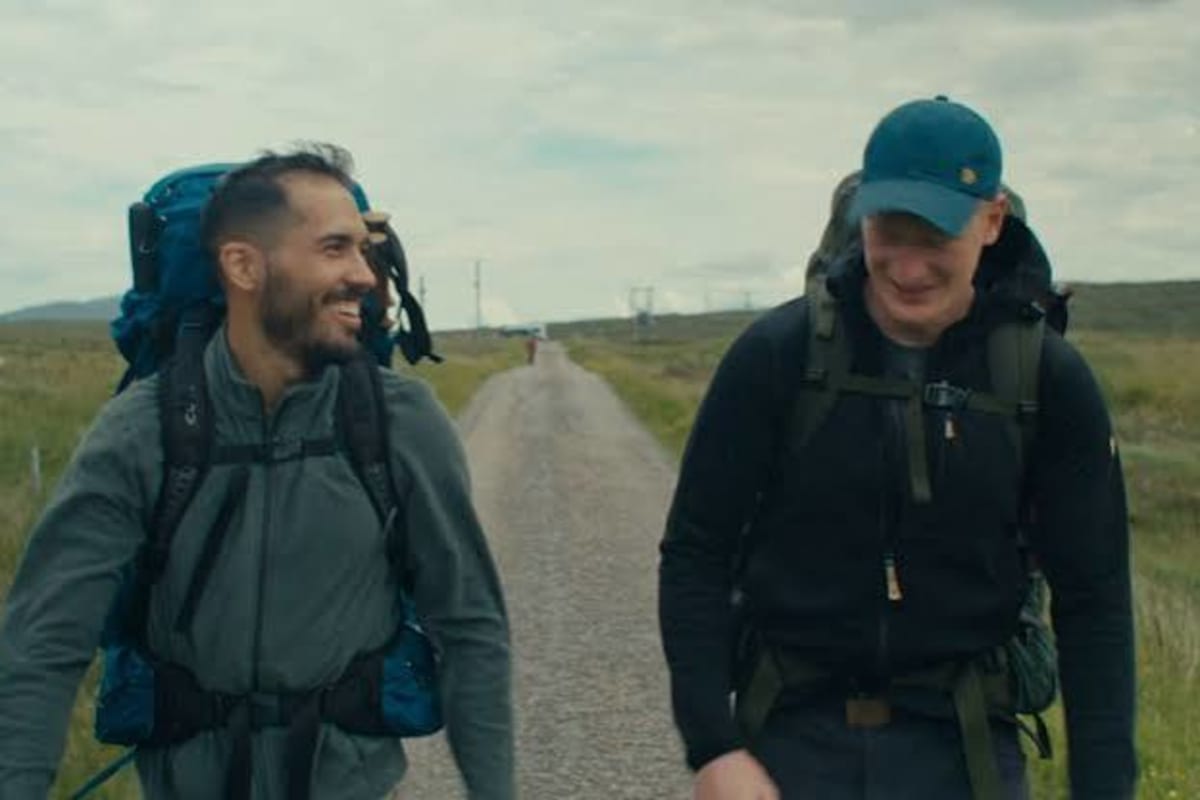
The film follows (come on, film writer Tobi) two friends taking on the challenge of walking 600 km together through the Scottish Highlands to resuscitate their friendship (after being separated for 10 years) and, ostensibly, themselves. And as someone who can’t visualise distances/measurements (it sounded like a ridiculous figure), it was a blessing that they quantified everything in days. The entire walk was supposed to take about 28 days. The dedication to walk for 28 days and be one with nature, not touching but becoming the grass… That takes real drive, commitment, and an unhinged need to get your steps in.
By the end of the film:
-I’d given myself multiple foot massages because it felt like I was walking right with them.
-I learnt about the fascinating concept of bothies.
-Yes, people who smoke cigarettes also have the cardiovascular endurance to walk 600 km.
In the course of their walk, these two explorers/friends/masochists encounter different people also on their own walks. And as someone who has lately been fascinated by the concept of sonder, getting a glimpse into random people’s lives scratched an itch in my brain. There was a man walking because his brother died of testicular cancer (kind of a crazy lore to drop to strangers in the first conversation, but hey, that’s what it’s all about). There was a man who’d worked all his life and was finally giving himself a break at 69 (don’t; be classy), the happiest he’d ever been. There was a woman who just wanted to watch the sunrise and scream into it (show of hands if you can relate).
While I wished the two friends had talked to each other more, I appreciated that there was a semblance of things left unspoken because of the setting: they were both in nature, succumbing to its harshness. And just like all the infamous Big Fights that happen on friendship trips, having to survive in the great outdoors—come rain, shine, sleet, and fantasies of an actual bed—really tests your friendships. As Mr. 69 said while talking to one of our main characters after both of them had a huge fight and split up for a bit, “Nothing brings out the truth in you like walking for a long time in nature.”
Having [hard] conversations with friends is hard. You have so much context on this one person who also has so much context on you. Short-term arguments/confrontations could be fixed in a quick sidebar conversation, but what happens when you’re victims of time and distance? The things that get left unsaid. Missed moments. The loss that proximity allows. Relationships are hard work, and something I’ve begun to learn growing up is that they don't really get easier, but you can always try. And you should, if you really cherish it.
At the end of the movie, after they complete the 600 km—this isn’t really a spoiler because you can probably tell in the first 30 minutes that the whole film is about the journey itself and that they make it to the end, plus I know anyone reading this isn’t particularly enthused by the thought of watching two men for over two hours just walking—they burst into tears and embrace, looking out onto the coastline.
A tiny win for the male loneliness epidemic everywhere.
I just hope they finally got everything off their chest on the way back home, because not doing it would be deeply unserious—at least, for the sake of the inevitable blisters on their feet.
Hi, I’m Tobi! And yes, I brought snacks. A lot. You could probably call it a bribe for not releasing this edition of the newsletter sooner. Or a concerning need to remain in your good graces. But you could also call it a peace offering, something to satiate your appetite as you read. It’s all about perspective, people. I hope everything is up to your standard. Until next time. Talk soon, x.
Interview

Sehb talks about finding her way into music, trusting her instincts and resisting the pressure to make everything perfect.
Author
Tosin Okewole
Duration
8 mins
Essay
With nearly 10 million new voters added to Nigeria’s register, we spoke to first-time registrants across the country about what pushed them to register and what they expect from the next election.
Author
Taxi Editorial
Duration
5 mins
Art
In this essay, Tobi reflects on The North, a film about two friends walking 600 km through the Scottish Highlands and what it has to say about friendship and time.
Author
Tobi Are
Duration
5 mins