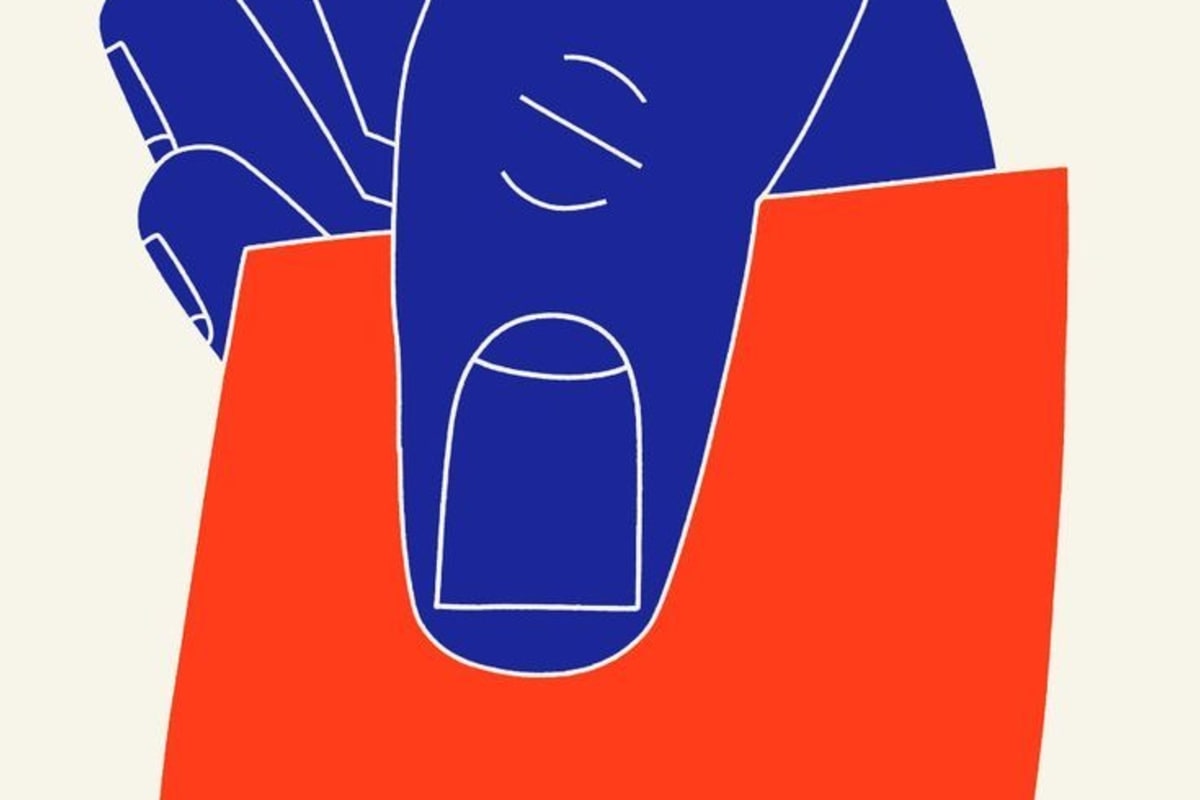
Through the lens of trees and metaphorical tables, an exploration of the varied ways humans experience, give, and receive love, questioning our motives and examining the politics behind our affections. Affection exists within very specific contexts for everyone. For me, it is easy to define my affection and its limits. I agree with the Oxford Dictionary's definition of affection, and mine is a gentle feeling of fondness or liking. There are barely any definitions of the words 'gentle' or 'fondness' that speak about the parameters within which they should exist. They just are. Fond. And gentle. Lacking violence. As a result of this, fondness, in my experience, is not something earned by merit or by deserving
Author
Modesire Ogunkola
Date
Read
10 mins
Essay
Modesire Ogunkola
Date
Read
10 mins
Share
What drives us to love? Through personal reflections and conversations at metaphorical tables, this essay explores the complex politics of affection, from unconditional fondness to transactional expectations, using the gentle metaphor of a neighbor's tree to unravel the various ways we choose to love.
Affection exists within very specific contexts for everyone. For me, it is easy to define my affection and its limits. I agree with the Oxford Dictionary's definition of affection, and mine is a gentle feeling of fondness or liking. There are barely any definitions of the words 'gentle' or 'fondness' that speak about the parameters within which they should exist. They just are. Fond. And gentle. Lacking violence. As a result of this, fondness, in my experience, is not something earned by merit or by deserving.
I possess affection for the tree in my neighbour's compound because even though its leaves are such a nuisance when I am trying to spread clothes, they are green. It does not need to give me anything or do anything, just exist as it is. That it exists alone brings me joy, even when it makes a mess that I have to clean up.
"Love is not something that we can be over familiar with. And it is not something that should be questioned. Love is its own truth, and while appreciation is welcome, it is a thing that just…is. Like white to teeth."
Love exists on the exact same plane for me, probably because it just strikes me as intense affection. Love is in choice and in attention and curiosity, all things that already exist within the bounds of affection to me. I love in a way that is regarded foolish; just the way I like it. I love without gamifying my affection, so it is not the reward for performance or service, not rooted in some already existing thing. It just is.
This is my favorite metaphor for love; trees. Plants. Things that need nurturing to grow. I will pour into a thing because of a decided fondness, even if it does not end up giving me anything. In my metaphor, 'anything' would be shade, or fruit, or pride.
I sit at a metaphorical table with a loved one, and the topic of love comes up. They say something to me about them loving too hard and being taken for granted, and that takes me aback. Not because they think they love too hard, but because they think love is a thing that can be taken for granted, when it IS granted, in my experience.
To me, love is not something that we can be over familiar with. And it is not something that should be questioned. Love is its own truth, and while appreciation is welcome, it is a thing that just…is. Like white to teeth.
I want more. I am suddenly fascinated by love and the politics of it. The ethics guiding love for my loved ones. The power at play and the intended recipients when love is given, and in fact, I want to hear from more people than my loved ones. I want to hear from strangers, so of course, I ask.
I sit us all at a metaphorical table and take the role of interviewer. First I ask the question that inspired my entire thought process, this big swelling curiosity. I sit at the head of this table and I ask, "What is your motive to love?"
Some say that their motive to love is reciprocity, and from their arguments, I understand it. Relatively. I ask if they would ever withhold love if reciprocity is not given. There is a dance around it, but eventually we all agree that they would withdraw affection, at least to a particular measure. One went as far as to ask me what the point of love that did not return was.
On the other end of the spectrum are those with more abstract answers, who answered my question with an almost defiance. With them, I am assured that the reason why they love is for joy, or fullness, to see their loved entity thrive, or that there is no motive.
Either way, I think affection manifests as an extension of the politics of self and is really political, in and of itself, and in the ways it is shared; it is only a matter of realizing how.
With nearly 10 million new voters added to Nigeria’s register, we spoke to first-time registrants across the country about what pushed them to register and what they expect from the next election.
In this essay, Tobi reflects on The North, a film about two friends walking 600 km through the Scottish Highlands and what it has to say about friendship and time.
 Go Back